
If you’re an avid biker, knowing how to clean a rusty bike chain is key to helping your bike work well for many years to come.
The good news is that you don’t have to go to a bike shop to take care of most surface rust. You can do it easily at home with basic equipment and protection, such as latex gloves.

How To Clean a Rusty Bike Chain
To clean a rusty bike chain, start by finding and removing it via the master link. Then wipe the chain with a paper towel soaked in degreaser, or soaked in degreaser and hot water for heavier rust. Finally, use citric acid and a wire brush or steel wool to remove the buildup.
Keep reading for more details on how to clean rust from your bike chain and how to know when to replace the chain altogether.
Preparing Your Work Surface
Before you can start removing rust from a bike chain, you need to prepare your work area by gathering your tools and taking the bike apart.
What Tools Do You Need?
Most of the tools that you need to clean a rusty bike chain are things that you can easily find at home. In terms of cleaning products, you will need water, degreaser, a cleanser such as lime juice or WD-40, and something to scrub at the chain with.
You should also get protective equipment, as both the rust and the harsher cleaning products can irritate your skin or eyes. Wear latex gloves and goggles to protect yourself. If you’re working indoors, put down towels or tarps to protect your floors.
Removing the Rusty Bicycle Chain
The first step in actually cleaning the bike chain is removing it from the rest of the bike. This way, you ensure that you get the rust out from the whole chain. Set your bike on a bike rack or upside-down to make inspecting it easier.
The key to removing the chain on newer models is the master link. This link will be larger than the other chain links and have a pin-slot connection. Learn how to find the master link here.
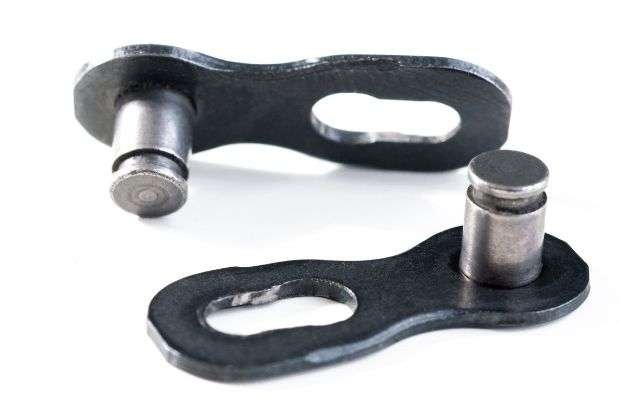 The master link looks different from the other chain links.
Slide the pin out and remove the chain (be sure to take a picture of the setup before you do this so that you know how to put it back together again).
If your bike doesn’t have a master link or the rust isn’t as bad, you can get away with cleaning it without separating the chain from the rest of the bike. But you will need to put in a bit more effort to clean all of the crevices of the chain, perhaps including using a small brush or toothbrush to clean all of the parts.
Also read: How to Remove Rust from Your Bike’s Disc Brakes
Degreasing the Rusted Chain
The next step in cleaning your chain is to run it through degreaser. Degreaser helps remove all kinds of surface buildup, such as dirt and debris. Cleaning the dirty chain makes it easier to assess the extent of the rust on the bike and actually get to the troubled areas.
Put some bike chain degreaser on a damp rag or paper towel and rub the bike chain vigorously. If your chain is dirty, buff the chain with the rag until all of the grease is gone.
Degreaser is an important tool to get rid of heavy grime buildup, but it can also strip away essential lubricants from your chain. Be sure to use a degreaser formulated specifically for bike chains and not gasoline or paint thinner. Wear gloves to protect your skin.
For Extra-Greasy Chains
If your chain is still greasy even after rubbing it with degreaser, it may need more intensive treatment. Fill a bucket with degreaser and leave the chain to soak for up to 30 minutes. Rinse afterwards with hot water to prevent severe buildup.
For extra-dirty chains, place it in a spray bottle or other small container with degreaser and shake vigorously. The shaking helps to get rid of more of the buildup.
If you get any grease on your clothes, see our post on how to remove bike grease from clothes.
Common Methods for Scouring Away the Rust
Once the bike chain is clean, you’ll have a clearer picture of the state of the surface rust. You can adjust the strength of your cleaning methods according to the extent of the rust damage.
For Light Surface Rust
If the chain only has light surface rust on it, you can use citric acid, lime juice, or another weaker acid to clean the chain rust off. Rust is a metal oxide, which means that it is basic in nature. Acid neutralizes the rust’s pH and makes it fall off the surface.
Put some lime juice or acid on a piece of steel wool and rub it along the chain. Wet the cleaning tool to get rid of any buildup that can affect the wool’s ability to clean the surface. You can also wipe down the chain periodically to get rid of buildup and check how much more you need to clean.
If you’re cleaning the chain without separating it from the bike, or if there are too many fine parts for the steel wool to get to, use a toothbrush to get the lime juice into the small crevices.
For Heavier Rust Patches
For more extensive bits of tough rust that won’t go away with some acid, use WD-40.
WD-40 removes rust because it is a lubricant. The lubricating properties of this spray release rust’s hold on metal surfaces and help scratch away at large patches of heavy rust.
Spray WD-40 on the bike chain, let it soak into the rust for a few minutes, then scrub with a wire brush. The tough bristles on the brush help break down the rust better than steel wool does.
After Getting Rid of Rust
Once you get rid of the rust, there are a few steps remaining before your bike is ready to ride again. First, rinse the chain with warm water and mild soap. Remnants of lime juice or other citrus products sometimes contain sugar that will make the chain stick, and WD-40 can also damage your bike parts.
Once the chain is clean and dry, re-attach it and double-check that the bike is moving smoothly. Finally, lubricate the chain to prevent future rust buildup. If you’re not sure what lubricant to use, see our post on what oil you can use on a bike chain.
 By lubricating your bike chain, you can ensure that your hard cleaning work pays off in the long term.
How To Tell If the Damage on a Rusty Chain Is Too Much
Sometimes the rust damage is too much to just clean off. If your chain is heavily rusted, or the links are too stiff to flex, or you notice any flaws with the integrity of the metal, head to a bike shop and get a new chain immediately.

Too much rust can damage the structural integrity of the chain and make it dangerous for you to keep riding the bike without replacing it. Always check your chain for damage before you ride again.
The Final Word on Cleaning Rust From Your Chain
Surface rust is all but inevitable on bike chains as they go through a lot when it comes to foul weather, mud, and debris from the road. If you clean your chain in time, you can get rid of the rust at home by cleaning the chain with degreaser, then removing the rust with lime juice or WD-40.
It’s important that you keep your bike chain clean and in excellent condition. A chain can skip or malfunction in other ways if it becomes damaged. Too much rust or other debris on the chain can cause your gears to not shift properly. To prevent rust buildup and to avoid rust so extensive that it damages the structure, be sure to clean your chain on a regular basis. Lubricating the chain can protect it from rust. Experts recommend lubricating your chain at least once a month or whenever you notice it sticking.
If you happen to be experiencing frequent chain drop, see our post on what to do about a bike chain that keeps falling off.